Electronics and Embedded Systems
Electronic components, circuits, microcontrollers, sensors and the link between software and physical hardware.
Overview
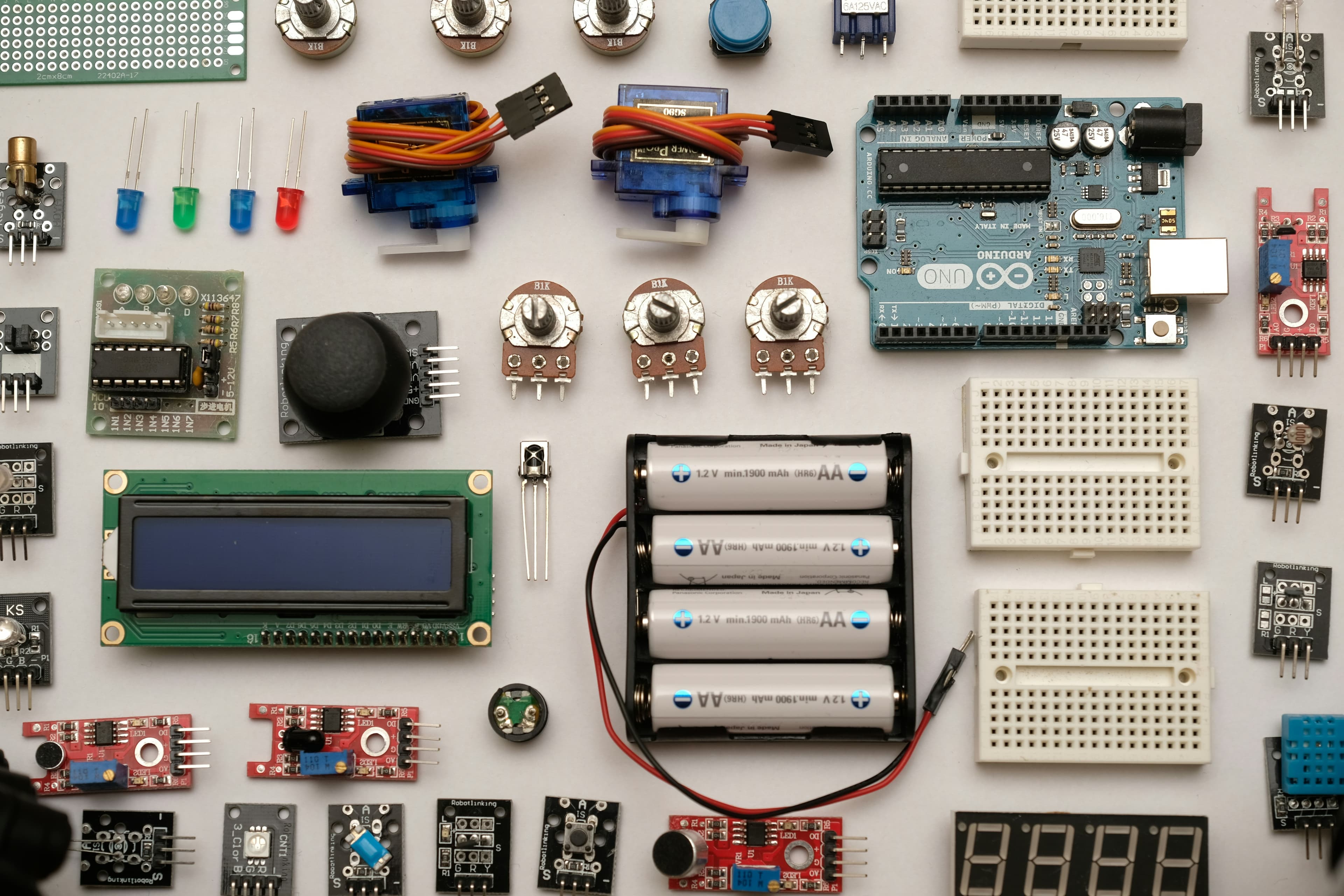
Electronics and Embedded Systems explores the hardware foundations of interactive and automated technology. Learners work with circuits, electronic components, microcontrollers such as Arduino and ESP32, sensors and actuators, and embedded programming. The area is taught through practical construction and experimentation rather than as abstract theory.
Why It Matters
Understanding electronics helps learners see how software reaches the physical world. It explains why a light comes on, why a motor turns and how a device knows what is happening around it.
Core Concepts and Skills
The ideas learners work with in this area, and the practical abilities they develop by using them.
Key Concepts
Skills You Can Develop
- Identifying common electronic components and how they behave
- Building and debugging circuits on a breadboard
- Programming a microcontroller to read inputs and drive outputs
- Explaining why a circuit does not work and fixing it methodically
- Wiring reliably and safely for repeatable experiments
Representative Learning Pathways
These are examples of subjects and skills within this technology area. Not every pathway is offered in every engagement; scope depends on the learners, timetable and program agreed.
Electronics fundamentals
Components, voltage, current, resistance and how a working circuit is built.
Circuit construction
Building, connecting and testing circuits reliably on breadboards and boards.
Microcontrollers: Arduino and ESP32
Programming small computers that read inputs and drive outputs.
Sensors and actuators
Reading the environment with sensors and responding with motors, lights and other outputs.
Embedded programming
Writing software that runs on hardware with real timing and resource constraints.
Sensor-based applications
Assembling practical systems that measure, decide and act.
Practical Activities
Who It Is For
- Learners curious about how everyday devices work inside
- Students connecting physics concepts such as voltage and current to real hardware
- Educators introducing circuits and embedded systems through experiment rather than theory alone
Engagement Opportunities
Delivered within school programs, clubs and workshops where equipment, session time and learner level allow.
How It Connects
Electronics connects to Robotics as its physical foundation, to Coding through embedded programming, and to AI through sensing and perception systems.
Coding and Computational Thinking
Programming, software creation, computational thinking, logical reasoning and problem-solving.
Explore this areaRobotics and Physical Computing
The combination of programming, electronics, sensors, mechanical components and physical interaction.
Explore this areaAI and Intelligent Systems
Artificial intelligence concepts and systems that process information, identify patterns and support intelligent applications.
Explore this areaExplore this technology area with us
Whether you are a school, an institution or a learner, we can discuss how this area fits your context and goals.
Discuss an Engagement